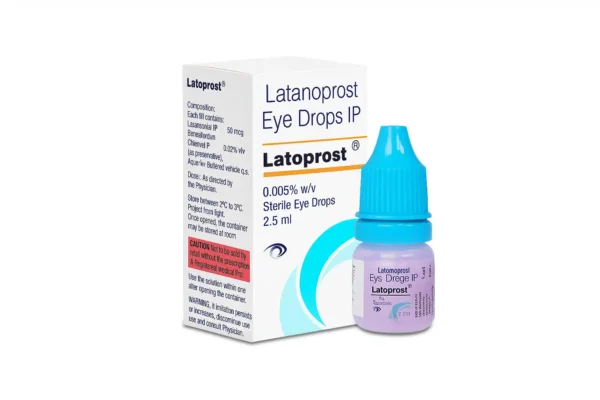
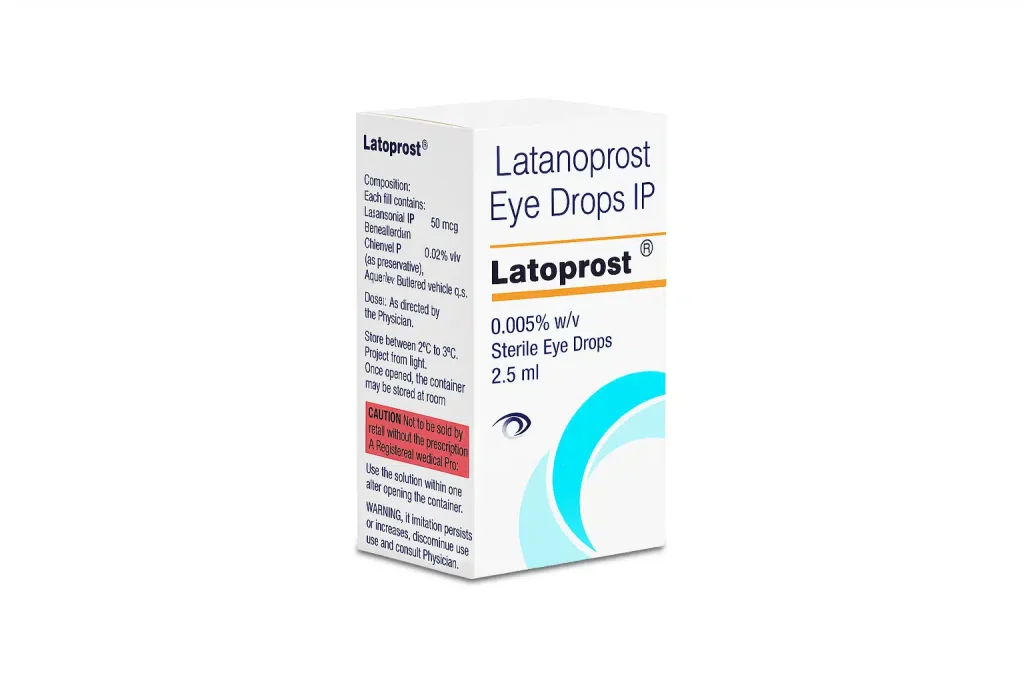
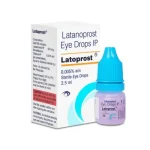
Latoprost Eye Drop

(0 customer reviews)
Price range: $48.45 through $183.00

In Stock

Latoprost Eye Drop

Price range: $48.45 through $183.00
In Stock
Secure
Checkout
Free
Shipping
30-Day
Returns
Quality
Guaranteed
Quantity
Safe Payment

All major cards & wallets accepted

Premium Quality

Tested to highest standards

24/7 Support

We're here whenever you need us

Money-Back Guarantee

30-day no questions asked

What Is Latoprost Eye Drop?

Latoprost Eye Drop is a 0.005% Latanoprost ophthalmic solution — a sterile, prescription-grade eye drop used to reduce elevated intraocular pressure (IOP) in adults with open-angle glaucoma or ocular hypertension. Latanoprost is a synthetic prostaglandin F2α analogue that works by increasing the natural outflow of aqueous humour from the eye, directly lowering the fluid pressure that threatens optic nerve health and long-term vision. It is a first-line treatment for glaucoma, endorsed by international ophthalmology guidelines as the preferred initial pharmacological agent due to its high efficacy, once-daily dosing convenience, and well-established tolerability. Available through Ed Care Store's dedicated eye care range, Latoprost Eye Drop provides patients with access to a reliable, affordable generic Latanoprost solution — the same active ingredient as branded Xalatan — without the premium brand-name price tag. It is part of the broader prescription eye drops collection available at Edcarestore.com, offering genuine pharmaceutical-grade quality with transparent pricing and discreet delivery.

How Does Latoprost Eye Drop Work?

Latoprost Eye Drop works by mimicking the action of naturally occurring prostaglandin F2α on the eye's fluid drainage system. To understand its mechanism, it helps to understand how intraocular pressure (IOP) develops. The eye continuously produces a clear fluid called aqueous humour in the ciliary body behind the iris. This fluid flows through the pupil into the anterior chamber of the eye and drains out through two main pathways: the trabecular meshwork (the primary conventional drainage route) and the uveoscleral pathway (an alternative secondary route). In open-angle glaucoma and ocular hypertension, drainage is impaired — fluid accumulates faster than it can exit, building pressure within the eye. This elevated IOP compresses and damages the optic nerve over time, causing progressive, irreversible vision loss. Latanoprost acts on FP prostaglandin receptors in the ciliary muscle and uveal scleral tissues. By activating these receptors, it remodels the extracellular matrix in the ciliary muscle, widening the spaces between muscle bundles and significantly increasing uveoscleral outflow — aqueous humour exits more efficiently through this secondary pathway. Studies show Latanoprost reduces IOP by an average of 6 to 8 mmHg from baseline — a clinically meaningful reduction that substantially slows glaucomatous optic nerve damage. The IOP-lowering effect begins 3 to 4 hours after the first dose, reaches maximum effect at 8 to 12 hours, and maintains a 24-hour pressure reduction with once-nightly dosing.

What Is Latoprost Eye Drop Used For?

Latoprost Eye Drop has two primary approved clinical indications, both centred on reducing elevated intraocular pressure to prevent optic nerve damage and vision loss.

1. Open-Angle Glaucoma

Open-angle glaucoma is the most common form of glaucoma, accounting for approximately 90% of all cases. It develops when the trabecular meshwork drainage angle remains open but becomes progressively less efficient at draining aqueous humour, causing IOP to rise over time. Because the pressure increase is gradual and painless, it is often diagnosed only after significant optic nerve damage has already occurred. Latoprost Eye Drop is a first-line treatment for open-angle glaucoma, used either as monotherapy or in combination with beta-blocker eye drops (such as timolol) when a single agent is insufficient to achieve target IOP.

2. Ocular Hypertension

Ocular hypertension refers to elevated IOP (typically above 21 mmHg) without detectable optic nerve damage or visual field loss — the pre-glaucoma stage. While not all patients with ocular hypertension progress to glaucoma, those with significantly elevated pressure or additional risk factors benefit from prophylactic IOP-lowering treatment. Latoprost Eye Drop is effective in reducing IOP in these patients, significantly reducing their risk of developing glaucomatous damage over time. Off-label, Latanoprost is also used in other glaucoma variants including normal-tension glaucoma, pigmentary glaucoma, and pseudoexfoliative glaucoma, as well as in secondary glaucomas where prostaglandin analog therapy is appropriate. Explore our full eye injections range and eye gel collection for complementary ophthalmic treatment options.

Latoprost Eye Drop Dosage and How to Use It

The standard adult dose is one drop instilled into the affected eye(s) once daily in the evening. Evening dosing is specifically recommended because clinical studies show it produces greater IOP reduction over the 24-hour period than morning dosing. Do not use more than once per day — increasing the frequency does not increase efficacy and may actually reduce the IOP-lowering effect or paradoxically increase IOP.

Step-by-Step Application Instructions

  • Wash your hands thoroughly with soap and water before handling the bottle
  • Remove contact lenses before instilling the drop — contact lenses must not be worn during application. Wait at least 15 minutes before reinserting lenses as the preservative benzalkonium chloride is absorbed by soft lenses
  • Tilt your head back and look upward. Use your index finger to gently pull down the lower eyelid to form a small pouch
  • Hold the dropper tip-down above the eye without touching it to the eye or any surface. Gently squeeze to release one drop into the lower eyelid pouch
  • Close the eye gently and press lightly on the inner corner (nasolacrimal occlusion) for 1 to 2 minutes — this reduces systemic absorption through the nasal mucosa and improves local efficacy
  • Wipe away any excess solution from around the eye with a clean tissue
  • If using additional eye medications, wait at least 5 minutes between each product. Always apply eye drops before eye ointments
  • If a dose is missed, skip it — do not double up. Resume the regular evening schedule the following day
  For other eye health support products, explore the eye care capsules available in our store.

How Long Does Latoprost Eye Drop Take to Work?

Latoprost Eye Drop produces measurable IOP reduction within 3 to 4 hours of the first instillation. The maximum pressure-lowering effect is reached 8 to 12 hours after administration. When used consistently as directed, a single evening drop maintains meaningful IOP reduction throughout the full 24-hour period. In clinical trials, Latanoprost 0.005% dosed once daily produced IOP reductions of 6 to 8 mmHg from baseline in patients with mean baseline IOP of 24 to 25 mmHg — a reduction equivalent to twice-daily timolol 0.5%. The most significant clinical outcomes from consistent long-term treatment are the prevention or deceleration of visual field loss and optic nerve damage. Most patients do not "feel" high IOP — it causes no pain or visual symptoms until significant damage has occurred. This makes consistent, long-term adherence essential even when the patient feels perfectly well. Latoprost controls glaucoma; it does not cure it. Do not discontinue treatment without consulting your ophthalmologist.

Latoprost Eye Drop Side Effects

Latoprost Eye Drop is generally well tolerated. Side effects are predominantly local (at the application site) and many are mild. However, some changes — particularly those affecting eye and eyelid pigmentation — may be permanent and require patient counselling before treatment begins.

Common Side Effects (Occurring in 5–15% of Patients)

  • Conjunctival hyperaemia — redness or bloodshot appearance of the white of the eye; the most commonly reported side effect, usually mild
  • Foreign body sensation — a feeling of grit or something in the eye
  • Burning, stinging, or itching during or shortly after instillation
  • Increased brown pigmentation of the iris (coloured part of the eye) — occurs gradually over months to years and may be permanent; particularly notable in patients with hazel, blue-brown, green-brown, or yellow-brown eyes
  • Darkening of the periorbital skin (skin around the eye and eyelids) — usually reversible on discontinuation
  • Eyelash changes — eyelashes may become longer, thicker, darker, or increase in number; typically reversible on stopping treatment
  • Blurred vision immediately after instillation — do not drive or operate machinery until vision clears
  • Dry eye or mild excessive tearing
  • Punctate epithelial erosions — superficial corneal surface changes, usually asymptomatic
 

Less Common but Serious Side Effects — Seek Ophthalmologist Review Promptly

  • Macular oedema — swelling of the central retina (macula) causing central vision blurring or distortion; higher risk in patients with aphakia (absent crystalline lens), pseudophakia with torn posterior capsule, or known macular disease
  • Anterior uveitis (iritis) — inflammation within the eye causing pain, redness, photophobia, and blurred vision
  • Reactivation of herpes simplex keratitis — Latanoprost should be used with caution in patients with a history of herpes simplex eye infection
  • Periorbital fat atrophy or deepened upper eyelid sulcus — associated with long-term prostaglandin analog use
  • Severe allergic reaction — hives, significant facial swelling, or anaphylaxis (rare)
  • Signs of eye infection — significant swelling, crusting, discharge, or severe pain not attributable to the drop itself
  Any new or worsening ocular symptoms, significant vision changes, or signs of infection should prompt immediate cessation of use and urgent ophthalmologist review. Additional ophthalmic support products available at Ed Care Store include our eye care supplement capsules for those supporting long-term eye health alongside prescription treatment.

Precautions and Contraindications

Latoprost Eye Drop is a prescription medication. Before beginning treatment, your ophthalmologist must be fully informed of all current eye conditions, systemic diseases, and other medications.

Who Should Not Use Latoprost Eye Drop?

  • Patients with known hypersensitivity or allergy to Latanoprost, benzalkonium chloride (the preservative), or any other ingredient in the formulation
  • Patients with active or suspected intraocular inflammation (uveitis, iritis) — Latanoprost may worsen inflammation
  • Patients with aphakia (absent crystalline lens) or pseudophakia with torn or absent posterior lens capsule — significantly elevated risk of macular oedema
  • Children and adolescents under 18 — safety and efficacy in paediatric patients has not been established for most indications
  • Patients with a history of herpetic keratitis — use is not recommended without specialist supervision
 

Special Precautions

  • Pregnancy: Latanoprost has been shown in animal studies to have embryotoxic potential at high systemic doses. Use during pregnancy is not recommended unless the benefit clearly outweighs the risk — discuss with your doctor
  • Breastfeeding: It is not known whether Latanoprost passes into breast milk in clinically significant amounts — exercise caution and consult your doctor
  • Inform your doctor if you are due to have eye surgery — you may need to switch bottles or pause treatment
  • Do not use two prostaglandin analogs simultaneously — combining prostaglandins can paradoxically increase IOP rather than reduce it
  • Patients with asthma or severe respiratory disease should monitor symptoms — there have been occasional reports of bronchospasm with Latanoprost, though this is rare
 

Latoprost Eye Drop vs Other Glaucoma Eye Drops

Latanoprost is one of several ophthalmic drug classes used to manage glaucoma. Here is how it compares with other commonly prescribed categories:
Drug Class Example Dosing Key Benefit
Prostaglandin Analog Latanoprost (Latoprost) Once daily (evening) Highest IOP reduction; once-daily convenience
Beta-Blocker Timolol Twice daily Long track record; often combined with prostaglandins
Carbonic Anhydrase Inh. Dorzolamide Two to three times daily Reduces aqueous production; additive effect
Alpha-2 Agonist Brimonidine Twice daily Neuroprotective potential; used in combination
Bimatoprost Analog Bimatoprost (Bimat) Once daily (evening) Similar mechanism; may suit intolerant patients
Latanoprost is consistently recommended as the first-line prostaglandin analog of choice due to its clinical evidence base, IOP efficacy, and tolerability profile. For patients who do not respond adequately to Latanoprost alone, combination therapy with a beta-blocker or carbonic anhydrase inhibitor under specialist supervision is standard. For a bimatoprost-based alternative within our store, explore our Bimat 0.03% Eye Drop, which shares the same prostaglandin analog mechanism.

Storage Instructions

Latoprost Eye Drop has specific storage requirements that differ between unopened and opened bottles. Before opening: store in a refrigerator between 2°C and 8°C (36°F–46°F), protected from light. After opening: store at room temperature between 15°C and 25°C (59°F–77°F), away from direct sunlight and heat. Discard the bottle 28 days after opening — even if solution remains — to prevent microbial contamination and infection risk. Do not freeze. Keep out of reach of children; children who use the same refrigerator should not have access to the medication. Do not touch the dropper tip to any surface, and replace the cap immediately after each use.

Buy Latoprost Eye Drop Online

Latoprost Eye Drop is available to order online at Edcarestore.com — a trusted platform for genuine, affordable pharmaceutical products. Ed Care Store ships all orders in discreet packaging with transparent pricing and reliable delivery, making it straightforward to access your eye medication from home without compromising on quality. Explore our complete eye drops product range for other ophthalmic solutions, browse our full eye care section for comprehensive ocular health options, or visit our blog for expert guidance on glaucoma, eye health management, and treatment options. Latoprost Eye Drop must be used under the supervision of a qualified ophthalmologist — do not self-diagnose or self-treat glaucoma. The information on this page is for educational purposes only and does not constitute medical advice. Individual results may vary.
Latoprost Eye Drop 1 Eye Drop, 3 Eye Drop, 6 Eye Drop
We offer free standard shipping on all orders. Orders are processed within 1-2 business days and typically arrive within 5-7 business days.
We accept returns within 30 days of purchase. Items must be in original condition with tags attached.
Yes! All our products come with a comprehensive warranty against defects in materials or workmanship.
Latoprost Eye Drop
$48.45 – $183.00Price range: $48.45 through $183.00
Product zoom
EdCareStore Footer Image

Address
5954 Old Cove Heath Rd Eupora, Mississippi(MS), 39744

US Call/Text
+1 (914) 999-2631

Email
support@edcarestore.com

Trending Products

Vardenafil

Blue Pill

Tadalafil

Oral ED Jelly

Bimatoprost

Shop by category

Shop All

Men’s Health

Women’s Health

Eye Care

Asthma

Diabetes

Company

About Us

Reviews

Medicine Policy

Shipping Policy

Communication Policy

Disclaimer Policy

User guide

Indian Pharmacies

Protect Yourself

Regulated Medicine

Returns & Exchanges

Safe and Secure Shopping

FAQs

Copyright © 2026 Edcarestore | All Rights Reserved

Request Your Free Sample

Fill out the form below and our pharmacist will get in touch!

Please select an option
Full name is required
Valid phone number is required
Valid email address is required
Please describe the sample you're looking for

Thank You!

Your free sample request has been received.

Due to high demand, our pharmacist will reach out to you within the next 3-4 business days.