Explore our range of Carevitra products — FDA-approved, clinically tested, and delivered discreetly to your door.
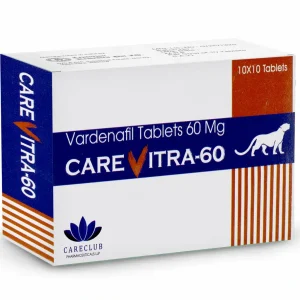
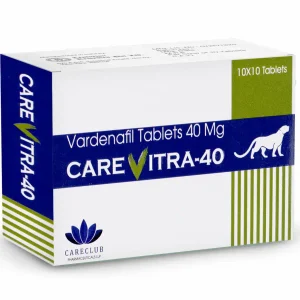
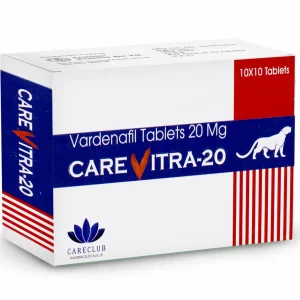
Carevitra is a prescription-strength oral medication manufactured by Careclub Pharmaceuticals LLP, an established Indian pharmaceutical company with an international export footprint covering the United States, United Kingdom, Germany, the Netherlands, and Italy. Carevitra contains vardenafil hydrochloride as its active ingredient — the identical compound found in brand-name Levitra, the FDA-approved vardenafil product originally developed by Bayer AG. As a bioequivalent generic of Levitra, Carevitra delivers the same clinically proven therapeutic outcomes at a dramatically more accessible price point, making it one of the most competitively priced and effective vardenafil options available to American men today.
Vardenafil belongs to the PDE5 (phosphodiesterase type 5) inhibitor class — the most medically significant drug class in the treatment of erectile dysfunction. Unlike its more widely known class-mates sildenafil (Viagra) and tadalafil (Cialis), vardenafil has a pharmacological profile that distinguishes it in clinically important ways: it demonstrates superior PDE5 binding selectivity, significantly lower inhibition of PDE6 (the enzyme responsible for visual processing in the retina), and a robust clinical efficacy in diabetic patients that has been demonstrated across multiple dedicated clinical trials. For millions of American men — particularly those who have experienced visual side effects with sildenafil or who have diabetes — Carevitra represents a meaningfully different and often better-tolerated option.
At ED Care Store, we carry Carevitra across all three available strengths — 20 mg, 40 mg, and 60 mg — so every man can find the dose that best fits his clinical needs and the guidance of his physician. Browse our complete Carevitra collection to see all available options with transparent pricing and discreet, reliable delivery.
This guide covers everything: the pharmacology of vardenafil, each Carevitra strength explained in detail, a complete dosage guide, onset and duration, side effects, contraindications, drug interactions, how Carevitra compares to other ED medications, and how to make the most of your treatment.
Erectile dysfunction is one of the most prevalent and most undertreated conditions in American men's health. Understanding the true scope of the problem is the first step toward overcoming the stigma that prevents so many men from seeking effective treatment:
ED is not a normal or inevitable consequence of aging. It is a medical condition with highly effective, evidence-based treatments. Carevitra — and vardenafil more broadly — is one of those treatments, backed by decades of rigorous clinical research and real-world clinical use across millions of men worldwide.
An erection is a complex, multi-system event that begins with sexual stimulation — physical, psychological, or both. Stimulation triggers the peripheral nervous system to release nitric oxide (NO) into the smooth muscle of the corpus cavernosum, the spongy erectile tissue running through the length of the penis. Nitric oxide activates an enzyme called guanylate cyclase, which produces cyclic guanosine monophosphate (cGMP) — the key intracellular messenger that causes smooth muscle in the penile arteries to relax. When this smooth muscle relaxes, resistance to blood flow decreases dramatically, blood rushes into the erectile chambers, and the penis becomes engorged and firm.
The entire process is dependent on cGMP remaining at adequate levels throughout sexual activity. The enzyme PDE5 (phosphodiesterase type 5) is naturally responsible for breaking down cGMP — this is how an erection subsides after ejaculation or when stimulation stops. In men with erectile dysfunction, however, PDE5 activity is dysregulated, degrading cGMP too rapidly during sexual stimulation and preventing sufficient blood engorgement to produce or sustain an adequate erection.
Vardenafil is a potent, competitive inhibitor of PDE5. By occupying the PDE5 enzyme's active site, it prevents cGMP from being broken down during sexual stimulation, allowing cGMP concentrations to remain elevated, smooth muscle to stay relaxed, and blood flow into the penis to be sustained — producing and maintaining the erection necessary for satisfactory sexual intercourse.
An absolutely critical point: vardenafil — like all PDE5 inhibitors — does not produce erections in the absence of sexual stimulation. It does not create desire. It does not generate arousal. It amplifies and sustains the physiological erection response that sexual arousal triggers. Sexual stimulation is not optional — it is a pharmacological requirement for vardenafil to work.
Not all PDE5 inhibitors are equally selective. The human body contains over 11 distinct phosphodiesterase enzyme subtypes (PDE1 through PDE11), distributed across different tissues and serving different physiological functions. A drug's selectivity profile — how strongly it inhibits PDE5 relative to other PDE subtypes — has direct clinical implications.
Vardenafil demonstrates among the highest PDE5 affinity and selectivity of any approved PDE5 inhibitor. Critically, it shows significantly lower inhibition of PDE6 compared to sildenafil. PDE6 is expressed almost exclusively in the photoreceptors of the retina and is responsible for the phototransduction cascade — how the eye converts light into nerve signals. Sildenafil's moderate PDE6 inhibition is the pharmacological basis for the visual disturbances — blue-tinge vision, increased light sensitivity, blurred vision — that some men experience with Viagra. Because vardenafil is far more selective for PDE5 over PDE6, these visual side effects are significantly rarer and milder with vardenafil than with sildenafil.
Vardenafil also shows minimal inhibition of PDE1 and PDE3 — enzymes relevant to cardiac contractility — contributing to its clean cardiovascular safety profile. Its effect on PDE11 (found in skeletal muscle) is also substantially lower than tadalafil's, which is why the back pain and muscle aches characteristic of tadalafil are notably less common with vardenafil.
Carevitra is available in three strengths, each designed for a specific clinical scenario. Choosing the right strength should always be done in consultation with a licensed healthcare provider, who will consider your overall health profile, any co-existing conditions, and any medications you take.
Carevitra 20 mg is the benchmark formulation and the most closely parallel to the original Levitra 20 mg prescription. The 20 mg dose is the standard FDA-approved as-needed dose for most adult men and is the most frequently prescribed vardenafil strength in clinical practice globally. A single tablet taken 30 to 60 minutes before sexual activity produces reliable PDE5 inhibition, enabling erections that are firmer, more consistent, and more sustained than without medication.
This is the correct starting dose for the large majority of men new to Carevitra. It strikes the optimal balance between therapeutic efficacy and side-effect profile for most patients, and it corresponds precisely to the pivotal clinical trial dose on which vardenafil's FDA approval was based.
Carevitra 40 mg is intended for men who have tried Carevitra 20 mg and found that while it produced some benefit, the response was partial or inconsistent. At double the standard starting dose, 40 mg delivers significantly stronger PDE5 inhibition and a more reliable erectile response across a broader range of clinical situations — including men with moderate ED secondary to diabetes, post-surgical nerve damage, or significant vascular disease.
Dose titration from 20 mg to 40 mg should always be performed under physician supervision. It is not a recommended first-line dose for men new to vardenafil. The potential for side effects — headache, flushing, blood pressure effects — increases proportionally with dose, and physician oversight ensures the benefit-risk balance is appropriate for your individual health profile.
Carevitra 60 mg is the highest-strength vardenafil formulation we carry. It is designed for men with more pronounced or treatment-resistant erectile dysfunction, where lower doses have demonstrated insufficient clinical response. This strength significantly exceeds the typical U.S. clinical dosing guidance (which sets the maximum approved dose at 20 mg for most patient populations) and should therefore be used exclusively under close medical supervision.
It is a powerful formulation with a correspondingly stronger side-effect potential. Men considering Carevitra 60 mg should have an established relationship with their prescribing physician, a clear clinical rationale for the higher dose, and a thorough discussion of risks, monitoring, and stopping criteria.
Use this table as your quick-reference dosing guide. Always follow your physician's specific prescription instructions — this table is informational, not a substitute for individual medical advice.
Carevitra Variant | Strength | Typical Patient Profile | When to Take | Max Frequency |
Carevitra 20 mg | 20 mg | First-time users; standard adult dose | 30–60 min before sex | Once per 24 hrs |
Carevitra 40 mg | 40 mg | Men needing stronger response after 20 mg | 30–60 min before sex | Once per 24 hrs |
Carevitra 60 mg | 60 mg | Moderate-to-severe ED; physician-supervised | 30–60 min before sex | Once per 24 hrs |
Low-dose start (10 mg)* | 10 mg | Men over 65; hepatic impairment; first trial | 30–60 min before sex | Once per 24 hrs |
* 10 mg (half-tablet of Carevitra 20 mg) may be an appropriate conservative starting dose for older men or those on interacting medications — discuss with your physician.
Most men experience the onset of Carevitra's effects within 25 to 60 minutes of taking the tablet. Clinical pharmacokinetic data show that vardenafil reaches peak plasma concentrations (Tmax) at approximately 30 to 120 minutes after oral dosing in most adults, with a median Tmax of approximately 60 minutes for the standard film-coated tablet. However, individual onset times vary considerably based on several modifiable factors (see below).
In controlled clinical studies, some men reported noticing the onset of improved erectile responsiveness in as little as 15 to 25 minutes — faster than is commonly reported with sildenafil in typical real-world conditions. This faster onset is attributed to vardenafil's pharmacokinetic properties and is one reason some men and their physicians prefer vardenafil over sildenafil when onset speed is a priority.
The therapeutic window for Carevitra — the period during which enhanced erectile responsiveness can be reliably expected — is approximately 4 to 6 hours for most men. Some men report effects somewhat beyond this window, though with progressively diminishing intensity as plasma vardenafil concentrations decline. The plasma half-life of vardenafil is approximately 4 to 5 hours.
This duration positions Carevitra similarly to sildenafil (4 to 5 hours) but importantly distinguishes it from tadalafil (Cialis / Vidalista), which lasts up to 36 hours. For men who prefer a finite, well-defined therapeutic window rather than multi-day coverage, this is often a practical preference. The therapeutic "on/off" character of vardenafil and sildenafil appeals to men who want the medication to be active when they choose and not present in their system the next morning.
Understanding how Carevitra compares to sildenafil and tadalafil is essential for making an informed treatment choice. Here is a full side-by-side comparison:
Feature | Carevitra (Vardenafil) | Generic Viagra (Sildenafil) | Generic Cialis (Tadalafil) |
Active Ingredient | Vardenafil HCl | Sildenafil Citrate | Tadalafil |
FDA Brand Reference | Levitra | Viagra | Cialis |
Onset of Action | 25–60 minutes | 30–60 minutes | 30–45 minutes |
Duration of Action | 4–6 hours | 4–5 hours | Up to 36 hours |
PDE5 Selectivity | Very high | High | High |
PDE6 Inhibition | Very low (fewest visual side effects) | Moderate (occasional blue-tinge) | Low |
Food Interaction | Minor (avoid high-fat) | Significant (high-fat delays) | None |
Daily Dosing Option? | No | No | Yes (2.5–5 mg) |
BPH Dual Indication? | No | No | Yes |
Best Use Case | Diabetes, visual sensitivity, fast onset | General ED, most well-known | Spontaneity, BPH, 36-hr window |
Carevitra is particularly worth considering over sildenafil-based options if: (1) you have experienced visual disturbances (blue-tinge, light sensitivity) with sildenafil; (2) you have diabetes, as vardenafil's clinical efficacy data in diabetic populations is especially strong; (3) you prefer a slightly faster onset; or (4) a high-fat meal is likely to precede sexual activity and you need a drug less sensitive to food interaction. For men who want to explore our sildenafil range, we carry a comprehensive Blue Pill sildenafil collection including Cenforce, Fildena, Kamagra, Malegra, and more.
Choose Carevitra if you prefer a finite therapeutic window rather than 36-hour coverage, if back pain and muscle aches (characteristic of tadalafil) have been a problem, or if you specifically value the fast-onset option in vardenafil's profile. For men who want the 36-hour spontaneity window and BPH dual coverage, our Tadalafil collection — including Vidalista, Tadalista, Tadarise, and others — is worth exploring.
We carry three vardenafil generic brands. Here is how Carevitra compares to its stablemates in our Vardenafil collection:
Both Carevitra and Vilitra contain identical vardenafil active ingredient. The pharmacological effect is the same — bioequivalent. Vilitra is manufactured by Centurion Laboratories (the same company that produces Vidalista and Cenforce), has an extensive global track record, and comes in a broad range of standard strengths. Carevitra is manufactured by Careclub Pharmaceuticals and is favored by men who prefer its specific tablet coating and formulation characteristics. Some men develop a mild preference for one over the other based on individual digestive response or tablet coating — never the pharmacological action of vardenafil itself.
Snovitra is another high-quality vardenafil generic in our portfolio. Like Carevitra, it contains the same active ingredient and delivers bioequivalent vardenafil exposure. Snovitra is popular for its competitive per-tablet pricing and is a reliable alternative for men who want straightforward vardenafil at a very accessible cost. The choice between Snovitra and Carevitra often comes down to personal preference, availability at a specific dose, and individual response to excipient profiles.
Vardenafil's FDA approval (August 2003) was supported by a comprehensive clinical development program involving thousands of men across multiple Phase III randomized controlled trials. The pivotal efficacy findings were:
Erectile dysfunction affects an estimated 50 to 75% of American men with diabetes. Both Type 1 and Type 2 diabetes damage erectile function through two primary mechanisms: diabetic neuropathy (nerve damage that impairs the neural signals initiating erection) and diabetic vasculopathy (endothelial dysfunction and microvascular disease that reduce blood flow to the penis).
Vardenafil has been studied in dedicated clinical trials specifically in diabetic populations, and the results are among the most compelling in the PDE5 inhibitor evidence base. In these trials, vardenafil produced statistically significant improvements in IIEF erectile function domain scores, successful penetration rates, and successful intercourse completion rates — with an efficacy profile comparable to that seen in non-diabetic men. This is clinically important because diabetic ED can be more refractory to treatment than ED from other causes.
The pharmacological basis for vardenafil's particular strength in diabetic men is believed to be its higher binding affinity for PDE5 and superior selectivity compared to sildenafil — enabling robust PDE5 inhibition even in the context of the partially impaired cGMP signaling that characterizes diabetic vascular dysfunction.
Several head-to-head clinical studies have compared vardenafil and sildenafil directly. While both drugs demonstrated comparable overall efficacy in broad ED populations, vardenafil consistently showed advantages in specific areas: faster onset of action in a subset of patients, significantly fewer visual side effects (attributed to PDE6 selectivity differences), and superior efficacy in diabetic subgroups in several study analyses.
Open-label extension studies of vardenafil have followed patients for up to two to four years of continuous treatment. These long-term data consistently demonstrate: (1) no development of pharmacological tolerance to the erectile effects of vardenafil over time; (2) a stable and predictable adverse event profile that does not worsen with continued exposure; (3) no cardiovascular safety signal of concern in men with appropriately managed cardiovascular risk factors.
Carevitra is medically contraindicated in the following situations. If any of these apply, do not take Carevitra without explicit physician clearance — some of these interactions are life-threatening:
The nitrate interaction is the most clinically critical issue with Carevitra. It is comprehensively covered in the contraindications section. The key additional nuance: men who have taken vardenafil must avoid all nitrates for at least 24 hours after the last dose, as vardenafil remains pharmacologically active in the body throughout this period.
Alpha-blockers (doxazosin, tamsulosin, terazosin, alfuzosin, silodosin) are prescribed for BPH and sometimes for hypertension. They lower blood pressure independently. When combined with vardenafil, the additive hypotensive effect can produce symptomatic hypotension — dizziness and fainting — particularly with the first combined dose.
Specific FDA-issued guidance for vardenafil and alpha-blockers: Start with the lowest vardenafil dose (5 to 10 mg) when already on stable alpha-blocker therapy. Allow at least 6 hours between taking an alpha-blocker and taking vardenafil, particularly with doxazosin. Tamsulosin at 0.4 mg has demonstrated a more favorable hemodynamic interaction profile with vardenafil and is generally considered the safest alpha-blocker to combine.
Vardenafil is metabolized primarily by hepatic CYP3A4 (and to a lesser extent by CYP2C9). Drugs that inhibit CYP3A4 raise vardenafil plasma concentrations, amplifying both efficacy and side-effect risk:
Because vardenafil has mild QT-prolonging effects at supratherapeutic doses, it should be used cautiously alongside other QT-prolonging drugs: class IA antiarrhythmics (quinidine, procainamide, disopyramide), class III antiarrhythmics (amiodarone, sotalol), and certain antibiotics (moxifloxacin). In men already on these medications, an ECG evaluation before initiating vardenafil is prudent.
Men on stable, well-controlled antihypertensive drug regimens can generally use Carevitra safely, as the additional blood pressure reduction from vardenafil alone is typically modest and clinically manageable in controlled hypertension. Starting at the lower 10 mg dose rather than 20 mg is a sensible precaution for the first dose, allowing individual blood pressure response to be assessed.
As discussed in the clinical evidence section, vardenafil has the strongest and most consistently demonstrated efficacy data in diabetic men of any PDE5 inhibitor in comparative analyses. This positions Carevitra as a particularly well-supported choice for the large and growing population of American men with Type 1 or Type 2 diabetes who experience ED — without any requirement for dose adjustment specifically for diabetes.
High blood pressure is among the most common causes of vasculogenic ED, damaging endothelial cells and reducing nitric oxide bioavailability throughout the vascular tree. Vardenafil has been extensively studied in hypertensive men on stable pharmacological management and shown to be effective and well-tolerated. Starting at 10 mg for the first dose, with appropriate monitoring for blood pressure response, is the recommended approach.
Pharmacokinetic studies show that Cmax (peak plasma concentration) and AUC (total exposure) are approximately 34 to 52% higher in men over 65 than in younger adults, reflecting reduced hepatic metabolism with age. FDA labeling therefore recommends a starting dose of 5 mg for men aged 65 and older, with subsequent titration to 10 mg or 20 mg based on efficacy and tolerability. The full clinical benefit of vardenafil remains available to older men — careful dose titration simply ensures the best benefit-risk balance.
Men with mild hepatic impairment (Child-Pugh A) can typically use standard Carevitra dosing. Men with moderate hepatic impairment (Child-Pugh B) should start at 5 mg and not exceed 10 mg per dose. Severe hepatic impairment (Child-Pugh C) is a contraindication, as discussed above.
Because vardenafil is primarily hepatically metabolized rather than renally cleared, dose adjustment is generally not required for mild to moderate chronic kidney disease. For men with end-stage renal disease not on dialysis, standard dosing is typically used. Dialysis patients require individual physician assessment.
Erectile dysfunction, in the majority of cases, is a vascular disease — a manifestation of the same endothelial dysfunction, arterial stiffening, and reduced nitric oxide bioavailability that underpins hypertension, coronary artery disease, and peripheral vascular disease. ED frequently presents 3 to 5 years before the first cardiac event, making it a critical early warning sign that physicians are increasingly recognizing. The lifestyle interventions that improve cardiovascular health directly improve the physiological substrate that Carevitra depends on to work optimally.
Regular aerobic exercise is the most evidence-supported non-pharmacological intervention for erectile function. A 2018 meta-analysis of 10 randomized controlled trials concluded that aerobic exercise — specifically, moderate-intensity aerobic activity for 40 minutes, 4 days per week — produced statistically significant and clinically meaningful improvements in erectile function independent of medication. The mechanisms are multiple: improved endothelial function, increased nitric oxide production, enhanced arterial elasticity, reduced inflammation, improved testosterone levels, and reduced anxiety.
The Mediterranean dietary pattern — characterized by high consumption of vegetables, fruits, whole grains, legumes, olive oil, fish, and moderate wine — has been associated in multiple large epidemiological studies with significantly lower ED prevalence. A prospective study involving over 25,000 men found that adherence to a Mediterranean or MIND diet was associated with a 10 to 19% lower risk of ED. Abdominal obesity specifically — a hallmark of Western dietary excess — drives the metabolic syndrome that is one of the strongest modifiable risk factors for ED.
Tobacco smoking is one of the most powerful modifiable risk factors for erectile dysfunction. Nicotine and tobacco combustion byproducts directly damage vascular endothelium, reduce arterial elasticity, decrease nitric oxide bioavailability, and accelerate systemic atherosclerosis — all of which directly impair the vascular mechanism underlying erection. Clinical studies show that men who quit smoking experience measurable improvements in erectile function within 2 to 6 months of cessation, with further gains as vascular health progressively recovers.
Performance anxiety is one of the most common drivers of erectile dysfunction in men under 45 — and one of the most responsive to treatment. Carevitra can powerfully break the anxiety cycle by restoring reliable erections and rebuilding sexual confidence. However, for men in whom psychological factors dominate, combining medication with cognitive behavioral therapy (CBT), mindfulness-based sex therapy, or couples counseling consistently produces better long-term outcomes than medication alone. A sex therapist experienced with ED can help address the psychological component that pharmacology alone cannot resolve.
Carevitra treats erectile dysfunction — the inability to achieve or maintain an adequate erection. It does not directly target premature ejaculation (PE), which is regulated by different serotonergic and adrenergic neurophysiological pathways. However, an important indirect pathway exists: the performance anxiety and loss of sexual confidence that accompany ED frequently trigger or worsen PE. By restoring reliable erections and reducing performance anxiety, Carevitra often produces secondary improvements in ejaculatory control in men where anxiety was the primary driver.
For men dealing with both conditions, we recommend reading our comprehensive blog guide How Do People Last in Bed for So Long? — which covers behavioral techniques, pharmacological options, and combined approaches for improving sexual endurance.
For men who experience both ED and PE simultaneously, combining Carevitra with a topical delay formulation can address both issues in the same session. Our Climax Delay Spray applies a mild lidocaine-based local anesthetic that reduces penile hypersensitivity and extends intravaginal ejaculation latency, complementing Carevitra's erectile support for a comprehensive performance enhancement approach. The two formulations address entirely different physiological targets and can be safely combined.
Some men prefer to vary their ED medication format depending on circumstances. For occasions when a faster-dissolving, water-free format is preferred, our ED Oral Jelly collection includes sildenafil-based jelly sachets that absorb rapidly through the oral mucosa for quick onset. Many men who primarily use Carevitra tablets keep oral jelly sachets as an alternative for specific situations — travel, spontaneity, or when swallowing a tablet is inconvenient.
The question that every first-time buyer of generic ED medication reasonably asks: is Carevitra actually equivalent to brand-name Levitra? The scientific and regulatory answer is clear and unambiguous: yes, generics and brand-name drugs containing the same active ingredient in the same dose and dosage form are required by law to be bioequivalent.
Bioequivalence — as defined by the FDA — requires that the generic product deliver the active ingredient to the bloodstream at the same rate and to the same total extent as the reference listed drug, within a statistically accepted confidence interval. For oral tablet formulations of well-characterized small-molecule drugs like vardenafil, this standard reliably translates to equivalent clinical efficacy and safety in real-world use.
The vardenafil molecule in a Carevitra 20 mg tablet is chemically and pharmacologically identical to the vardenafil in a brand-name Levitra 20 mg tablet. The differences between the two products are confined entirely to the inactive ingredients — the binders, fillers, disintegrants, and tablet coatings. These affect appearance and potentially subtle dissolution kinetics but have no bearing on the pharmacological action of vardenafil in the body.
Brand-name Levitra is largely discontinued in the U.S. market (as of around 2020, Bayer's brand-name Levitra is not actively marketed). FDA-approved generic vardenafil, however, remains fully available through licensed pharmacies. The practical benefit of Carevitra is twofold: the same active ingredient at a dramatically more accessible price, and the availability of multiple dose strengths (including 40 mg and 60 mg) that were not commercially offered under the original brand.
We built ED Care Store with one central conviction: every American man deserves affordable, discreet, and reliable access to the ED medication that works best for him — without insurance barriers, without judgment, and without paying brand-name prices for a generic molecule. Here is what makes us the right choice:
Browse our complete Men's Health collection to explore our full range of ED treatments. Review our shipping policy for full information on delivery timelines and packaging. And if you have questions about any product, our contact page connects you directly with our team.
Not sure whether Carevitra, a sildenafil generic, or a tadalafil option is the right choice for you? Read our comprehensive comparison blog post: What Is the Best Pill for ED? — a straightforward guide to all major ED medications designed to help American men make confident, informed treatment decisions.
Most men experience the onset of Carevitra's effects within 25 to 60 minutes of taking the tablet. On an empty or light-food stomach, effects can begin in as little as 25 to 30 minutes. With a moderate meal, 45 to 60 minutes is a more reliable expectation. A high-fat meal can push onset to 90 minutes or more — avoid heavy meals if you want consistent, predictable timing.
The therapeutic window — the period during which enhanced erectile responsiveness is reliably expected — is approximately 4 to 6 hours for most men. This is broadly similar to sildenafil (Viagra) and shorter than tadalafil (Cialis/Vidalista), which lasts up to 36 hours. For men who prefer a finite, well-defined active window, vardenafil's 4 to 6 hour duration is often a practical preference.
Both are PDE5 inhibitors that work through the same fundamental mechanism, but vardenafil (Carevitra) has meaningfully different pharmacological characteristics: significantly lower PDE6 inhibition (meaning far fewer visual side effects), higher PDE5 binding affinity (meaning stronger PDE5 inhibition per milligram), and superior efficacy data in diabetic populations. For men who have experienced blue-tinge vision or light sensitivity with sildenafil, or who have diabetes, Carevitra is frequently the better-tolerated and more effective choice.
For most men on stable, well-managed antihypertensive therapy who are NOT taking nitrate-based medications, Carevitra can be used safely with appropriate starting-dose caution (10 mg for the first dose rather than 20 mg). Men taking alpha-blockers for BPH require specific timing and dose precautions. The absolute exception is nitrate medications — this combination is unconditionally contraindicated regardless of dose or timing.
Most men experience a meaningful improvement in erectile function on the first dose. However, a significant proportion of men see their best results on the second or third use — once the performance anxiety that commonly accompanies the first use of a new ED medication has diminished and sexual confidence has been restored. If the first dose doesn't produce the result you hoped for, evaluate timing, stimulation, food and alcohol consumption before concluding the medication isn't effective for you.
Long-term extension data from clinical trials spanning two to four years of continuous use show that vardenafil's safety and efficacy profiles are stable over time. No tolerance to the therapeutic effect develops with long-term use. The adverse event pattern does not worsen with continued exposure. As with all prescription medications, periodic reassessment with your prescribing physician is appropriate for long-term users.
Common, mild side effects (headache, flushing, nasal congestion, mild dizziness) typically resolve within 2 to 4 hours without intervention. Standard analgesics can help with headache. If side effects are persistent, distressing, or severe, contact your physician. For priapism (erection lasting more than 4 hours), sudden vision loss, or sudden hearing loss, seek emergency care immediately without delay.
The active ingredient — vardenafil — is chemically identical. Bioequivalence standards ensure the same pharmacological exposure. The practical differences are price (Carevitra is significantly more affordable) and the availability of higher strengths (40 mg and 60 mg) that were not routinely available under the original Levitra branding. For clinical purposes, they are equivalent.
Carevitra represents one of the most precisely engineered and clinically validated treatments for erectile dysfunction available to American men. Its active ingredient vardenafil's superior PDE5 selectivity, significantly lower visual side-effect profile, robust diabetic ED efficacy, and fast onset make it a genuinely differentiated option — not simply a Viagra equivalent with a different name.
The three-strength lineup (20 mg, 40 mg, 60 mg) accommodates a wide range of clinical presentations, from straightforward mild-to-moderate ED responding well to the standard 20 mg dose to more challenging cases requiring physician-supervised higher-dose therapy. And with generic pricing making vardenafil accessible at a fraction of the original brand cost, the financial barrier that has historically kept too many American men from effective treatment is substantially reduced.
Always work with a licensed healthcare provider to confirm vardenafil is appropriate for your health profile, to select the correct starting dose, and to review potential drug interactions — especially if you are taking nitrate medications, alpha-blockers, or CYP3A4 inhibitors. Then, when you are ready, trust ED Care Store to deliver exactly what you ordered, packaged discreetly, at a price that respects your budget.
Medical Disclaimer: The content in this article is provided by ED Care Store for informational and educational purposes only and does not constitute medical advice, diagnosis, or treatment. Carevitra (vardenafil) is a prescription medication in the United States. Always consult a licensed physician before starting, stopping, or adjusting any medication. Never combine Carevitra with nitrate medications or riociguat — these combinations can be life-threatening. Never use Carevitra if you have congenital QT prolongation or are taking QT-prolonging antiarrhythmics. Individual results vary. All products are subject to applicable laws, valid prescription requirements, and our platform's terms and conditions.

