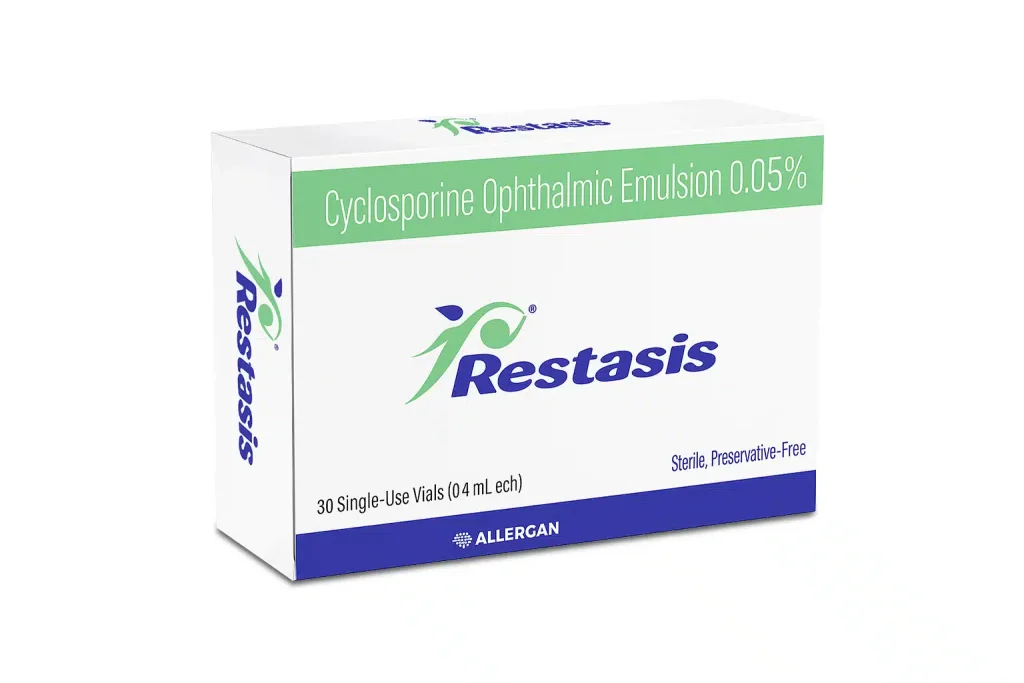
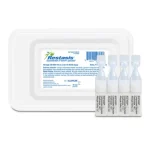
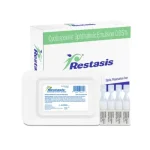
Restasis 0.05 Eye Ophthalmic Emulsion

(0 customer reviews)
Price range: $546.00 through $1,163.00

In Stock

Restasis 0.05 Eye Ophthalmic Emulsion

Price range: $546.00 through $1,163.00
In Stock
Secure
Checkout
Free
Shipping
30-Day
Returns
Quality
Guaranteed
Quantity
Safe Payment

All major cards & wallets accepted

Premium Quality

Tested to highest standards

24/7 Support

We're here whenever you need us

Money-Back Guarantee

30-day no questions asked

What Is Restasis 0.05% Ophthalmic Emulsion?

Restasis 0.05% Ophthalmic Emulsion (cyclosporine ophthalmic emulsion) is the first and most clinically established prescription eye drop approved by the U.S. Food and Drug Administration (FDA) to treat the root cause of chronic dry eye — not just the symptoms. While standard artificial tears and over-the-counter lubricating drops temporarily relieve the sensation of dryness, Restasis works differently. It targets the underlying inflammation that suppresses the lacrimal glands — the glands responsible for producing your tears — helping to restore your eyes' natural ability to produce real, stable tears over time. Manufactured by Allergan, Inc. (an AbbVie company), Restasis has been prescribed to millions of patients worldwide and remains the gold standard in pharmacological dry eye therapy. It is indicated for adults and patients aged 16 and older whose tear production is presumed to be suppressed due to ocular inflammation associated with keratoconjunctivitis sicca (chronic dry eye syndrome). Important: Restasis is not an immediate-relief drop. It is a long-term, disease-modifying therapy designed to rebuild natural tear production over several months of consistent use. You can find Restasis and a full range of ophthalmic formulations in our Eye Drops collection — sourced from verified manufacturers and delivered discreetly to your door.

How Does Restasis Work? Understanding the Mechanism of Action

To understand how Restasis works, it helps to understand why chronic dry eye develops in the first place.

The Role of Inflammation in Dry Eye Disease

In chronic dry eye disease, the surface of the eye and the lacrimal glands (which produce tears) become the target of the immune system's own T-lymphocytes — white blood cells that release inflammatory chemicals. This sustained inflammation damages the delicate cells that manufacture tears, reducing both the volume and quality of tear production. The result is a self-reinforcing cycle: inflammation damages tear glands, reduced tears further irritate the eye surface, which triggers more inflammation.

How Cyclosporine Breaks the Cycle

The active ingredient in Restasis — cyclosporine 0.05% — is a calcineurin inhibitor. When applied topically to the eye, cyclosporine works by blocking the action of calcineurin, a protein that activates T-lymphocytes. By suppressing T-lymphocyte activity, Restasis reduces the inflammatory cascade at the lacrimal gland level, gradually allowing the glands to recover their normal tear-producing function. This mechanism makes Restasis fundamentally different from all other eye drops — it is the only ophthalmic formulation that addresses the immunological basis of dry eye, not merely providing surface lubrication.

Is Cyclosporine in Restasis an Immunosuppressant?

When administered systemically (by mouth or injection), cyclosporine acts as a powerful immunosuppressant used in organ transplants. However, when applied as Restasis eye drops, the concentration is far lower (0.05%), and blood absorption is undetectable. Clinical studies have confirmed that Restasis does not cause systemic immunosuppression when used as directed. The emulsion formulation — a fine suspension of cyclosporine in castor oil — is specifically designed to maximize ocular surface contact and penetration into the conjunctival tissue while minimising systemic absorption.

What Is Restasis Used For?

Primary Indication: Chronic Dry Eye Disease

Restasis is FDA-approved to increase tear production in patients whose tear production is presumed to be suppressed due to ocular inflammation associated with keratoconjunctivitis sicca (KCS) — the medical term for chronic dry eye syndrome. Chronic dry eye is far more than occasional eye discomfort. It is a progressive, inflammatory condition of the ocular surface characterised by insufficient tear volume, compromised tear film stability, or impaired tear quality. Without treatment, it can lead to damage of the corneal surface and increasing visual disturbance.

Who Is Most Likely to Have Chronic Dry Eye?

Chronic dry eye disproportionately affects certain groups. Research consistently shows it is significantly more prevalent among women — particularly those experiencing hormonal shifts during menopause or pregnancy. If you are exploring women's health solutions alongside your eye care needs, our  Chronic dry eye disproportionately affects certain groups. Research consistently shows it is significantly more prevalent among women — particularly those experiencing hormonal shifts during menopause or pregnancy. If you are exploring women's health solutions alongside your eye care needs, our Women's Health section offers a comprehensive range of products. Groups most commonly affected include:
  • Women over 50 — hormonal changes at menopause significantly reduce aqueous tear production
  • Contact lens wearers — prolonged lens wear disrupts tear film stability and reduces corneal sensitivity
  • Patients with autoimmune conditions — including Sjogren's syndrome, rheumatoid arthritis, and lupus
  • Post-surgical patients — LASIK, PRK, and cataract surgery frequently trigger dry eye as a side effect
  • Screen-heavy professionals — extended digital device use dramatically reduces blink rate and tear film refresh
  • People on certain medications — antihistamines, antidepressants, beta-blockers, and diuretics all reduce tear production
  • Patients in dry/air-conditioned environments — environmental evaporative stress on the tear film

Other Conditions Where Restasis May Be Used

Beyond the primary FDA-approved indication, ophthalmologists may prescribe Restasis off-label for related inflammatory conditions of the eye surface, including:
  • Meibomian gland dysfunction (MGD) with associated inflammatory dry eye
  • Graft-versus-host disease (GvHD) affecting the ocular surface
  • Ocular rosacea with secondary dry eye
  • Chronic blepharitis with tear film instability
Always follow your prescribing ophthalmologist's guidance for your specific diagnosis.

How to Use Restasis: Dosage and Administration

Standard Dosage

The recommended dose for Restasis is one drop in each affected eye, twice daily, approximately 12 hours apart. Most patients are instructed to use it morning and evening, at consistent times each day. Do not use more than one drop per eye per dose. Using additional drops does not increase effectiveness but may increase the risk of irritation.

Step-by-Step Application Instructions

  1. Wash your hands thoroughly with soap and water before handling the vials or touching your eyes.
  2. If using single-use vials: Invert the vial several times to obtain a uniform, white, opaque emulsion before opening.
  3. Tilt your head back slightly and look upward toward the ceiling.
  4. Gently pull down your lower eyelid with a clean finger to form a small pouch.
  5. Hold the vial tip 1–2 cm above your eye — never allow it to touch your eye, eyelashes, or any surface.
  6. Squeeze the vial gently to release one drop into the lower lid pouch.
  7. Close your eye gently and apply light pressure to the inner corner (near the nose) for 1–2 minutes. This slows drainage and maximizes the drop's contact with the ocular surface.
  8. Repeat for the other eye using the same vial or a new one.
  9. Discard single-use vials immediately after use — they are not designed for re-use.

Can Restasis Be Used With Artificial Tears?

Yes. Restasis can be used alongside artificial tear lubricating drops for immediate symptomatic relief while Restasis addresses the underlying inflammation long-term. However, you must wait at least 15 minutes between applying artificial tears and Restasis to avoid wash-out of the medication. Explore our range of compatible  Yes. Restasis can be used alongside artificial tear lubricating drops for immediate symptomatic relief while Restasis addresses the underlying inflammation long-term. However, you must wait at least 15 minutes between applying artificial tears and Restasis. Explore our range of compatible lubricating drops, including Nano Tears 0.1 and Trehalube Eye Drops, which are preservative-free and well-suited for combination therapy.

How Long Does Restasis Take to Work?

This is one of the most frequently asked questions by new Restasis users — and understanding the timeline is essential to staying committed to treatment. Restasis does not provide instant relief. Its therapeutic effects are cumulative and build gradually as the anti-inflammatory action allows the lacrimal glands to recover. Based on clinical trial data:
Timeline What to Expect
Weeks 1–4 Some patients experience a reduction in irritation and burning. Tear production may not yet be measurably increased.
Months 1–3 Early improvements in tear film stability and ocular surface health may begin. Dryness symptoms may feel somewhat less intense.
Month 3–6 Clinically significant increases in tear production begin to appear in a proportion of patients. Schirmer wetting scores improve.
Month 6+ Full lacrimal gland recovery in responsive patients. Statistically significant increases in Schirmer wetting were demonstrated in clinical trials at 6 months.
Clinical studies showed that approximately 15% of Restasis-treated patients achieved a clinically significant increase in tear production at 6 months vs. approximately 5% with vehicle alone. Patience and consistent use are essential — do not discontinue before your ophthalmologist reviews your response. If you feel symptoms are severe while waiting for Restasis to take effect, speak with your prescribing doctor about using supplemental lubricating eye drops from our  If you feel symptoms are severe while waiting for Restasis to take effect, speak with your prescribing doctor about using supplemental lubricating drops or, for nighttime relief, a gel formulation from our Eye Gel range alongside your Restasis therapy.

Restasis Side Effects: What to Expect

Like all medications, Restasis may cause side effects. Most are mild, localised to the eye, and tend to diminish with continued use as your eyes adapt to the emulsion.
Side Effect Frequency Action Required
Ocular burning / stinging Most common (reported in ~17% of patients) Usually transient; improves over weeks of use
Eye redness Common Typically mild; report if persistent or worsening
Watery eyes / discharge Common Usually temporary and self-resolving
Eye pain Less common Consult your eye doctor if persistent
Foreign body sensation Less common Often improves with continued use
Blurred vision Less common Typically temporary after application
Itching / stinging Less common Reduce by applying at consistent intervals
Severe allergic reaction Rare (post-marketing) Stop immediately and seek emergency care
Eye swelling / angioedema Rare (post-marketing) Discontinue and contact your physician
This is not a complete list of all possible side effects. Report any concerns to your ophthalmologist promptly. You are also encouraged to report adverse effects of prescription drugs to the FDA at www.fda.gov/medwatch or by calling 1-800-FDA-1088.

Restasis Warnings and Precautions

Who Should Not Use Restasis?

  • Patients with known hypersensitivity (allergy) to cyclosporine or any other ingredient in the formulation
  • Patients with active eye infections (including active viral, bacterial, or fungal keratitis) — treat and resolve the infection before starting Restasis
  • Patients who are currently wearing contact lenses at the time of administration

Contact Lenses

Restasis is not approved for use while wearing contact lenses. Remove your contact lenses before administering Restasis, and wait at least 15 minutes before reinserting them. Note that patients with significant dry eye are often advised to reduce contact lens wear or transition to glasses during treatment, as contact lenses themselves can worsen corneal dryness.

Pregnancy and Breastfeeding

Restasis is classified as a Category C drug for pregnancy. Studies have not definitively established its safety during pregnancy. Following topical ocular application at the standard 0.05% dose, blood cyclosporine concentrations are below detectable limits, meaning systemic fetal exposure is expected to be negligible. Nonetheless, Restasis should only be used during pregnancy if the prescribing physician judges the potential benefit to outweigh any theoretical risk. Consult your doctor before use if you are pregnant, planning to become pregnant, or breastfeeding.

Paediatric Use

Restasis is not approved for patients under 16 years of age. Safety and efficacy have not been established in younger children.

Contamination Prevention

Never allow the vial or bottle tip to touch your eye, eyelashes, eyelids, or any other surface. Contamination of the vial tip can introduce bacteria or other microorganisms to the medication and subsequently to your eye, potentially causing serious infections. Always discard single-use vials immediately after one dose.

Restasis vs. Artificial Tears: What Is the Difference?

A very common question — and an important distinction to understand before starting treatment.
Feature Restasis 0.05%
Mechanism Anti-inflammatory — suppresses T-lymphocyte activity
Effect Disease-modifying — increases natural tear production
Onset Gradual — 3–6 months for measurable improvement
Requires Prescription Yes
Use Frequency Twice daily — fixed schedule
Long-term Goal Restore lacrimal gland function and natural tear production
Best For Moderate to severe chronic dry eye with underlying inflammation
Restasis and artificial tears are not mutually exclusive. Many patients use both — Restasis as the foundational therapy and artificial tears for on-demand comfort throughout the day. This combination approach is clinically supported, provided the 15-minute interval between applications is maintained.

How to Store Restasis Properly

  • Store Restasis at room temperature between 15°C and 25°C (59°F and 77°F)
  • Do not refrigerate or freeze — temperature extremes can affect the emulsion stability
  • Keep in the original foil or tray packaging to protect from light
  • Keep out of reach of children
  • Do not use if the vial appears damaged, discoloured, or contains visible particles
  • Single-use vials: discard immediately after use — they cannot be resealed
  • MultiDose bottle: prime before first use; cap tightly after each use; discard when empty

Restasis Compared to Other Prescription Dry Eye Treatments

Restasis is not the only prescription option for chronic dry eye — though it is the longest-established and most widely prescribed. Here is how it compares with other prescription therapies:

Restasis vs. Xiidra (Lifitegrast)

Xiidra contains lifitegrast, a lymphocyte function-associated antigen-1 (LFA-1) antagonist — an entirely different anti-inflammatory mechanism. While both reduce ocular inflammation, Xiidra may show earlier symptomatic improvement (some patients report improvement within 2 weeks), whereas Restasis has a longer established clinical record. The choice between them often depends on individual patient response, insurance coverage, and prescriber preference.

Restasis vs. Cequa (Cyclosporine 0.09%)

Cequa contains a higher concentration of cyclosporine (0.09%) using a nanomicellar delivery system for enhanced corneal penetration. It is a newer option for patients who do not respond adequately to Restasis 0.05%. Both are prescription-only and work via the same mechanism.

Restasis vs. Steroid Eye Drops

Short-term corticosteroid eye drops (prednisolone, loteprednol) may be prescribed alongside Restasis in the early weeks to provide faster inflammation relief while Restasis takes effect. However, long-term steroid use carries risks of elevated intraocular pressure and cataract formation — making Restasis the preferred long-term maintenance therapy. For patients managing other serious ophthalmic conditions, such as glaucoma, requiring prescription eye drops alongside Restasis, our range includes specialised formulations. For example,  For patients managing other serious ophthalmic conditions such as glaucoma alongside dry eye, our range includes specialised formulations. For example, Lumigan eye drops are available for patients prescribed bimatoprost for intraocular pressure management.

Managing Eye Infections Alongside Dry Eye Treatment

Chronic dry eye makes the ocular surface more susceptible to bacterial infections. Patients undergoing Restasis therapy should be aware that any new onset of redness, discharge, crusting, or significantly worsened pain may indicate a superimposed bacterial infection, which requires separate treatment. In such cases, your doctor may prescribe a course of antibiotic eye drops. Our prescription ophthalmic range includes Vigamox 5ml eye drops (moxifloxacin 0.5%), a broad-spectrum fluoroquinolone antibiotic indicated for bacterial conjunctivitis and corneal ulcers. Never self-diagnose or self-treat an eye infection. If you suspect a bacterial eye infection, consult your ophthalmologist before adding antibiotic drops.

Your Complete Eye Care Journey at Ed Care Store

Restasis is the cornerstone of chronic dry eye treatment — but comprehensive eye care often requires a multi-faceted approach. At Ed Care Store, our ophthalmic range is designed to support every stage of that journey.

Eye Drops

Our Eye Drops range includes lubricating drops, antibiotic formulations, antihistamine drops for allergy relief, and prescription dry eye therapies — all sourced from verified manufacturers.

Eye Gel

For nighttime or extended-wear relief, our Eye Gel products provide thicker, longer-lasting ocular surface lubrication — ideal to use alongside Restasis for patients with moderate to severe dry eye.

Eye Care Capsules

Nutritional support plays a meaningful role in dry eye management. Our Eye Care Capsules collection includes omega-3 and antioxidant formulations that complement topical therapy, particularly for Meibomian Gland Dysfunction and age-related ocular conditions.

Eye Injections

For patients managing serious retinal conditions — including wet age-related macular degeneration, diabetic macular edema, or retinal vein occlusion — alongside dry eye, our Eye Injections section provides information and access for those who have been prescribed intravitreal therapies.

Why Buy Restasis from Ed Care Store?

Purchasing prescription ophthalmic medication online requires a trusted, reliable source. Here is what sets Ed Care Store apart:

Pharmaceutical-Grade Sourcing

Every product we carry — including Restasis — is sourced from reputable, verified pharmaceutical manufacturers and distributors. We do not compromise on authenticity or quality. What you order is exactly what you receive.

Transparent, Competitive Pricing

Prescription eye drops at US retail pharmacies can carry significant mark-ups. Our sourcing model allows us to pass genuine savings to you without any reduction in product quality.

Fast, Discreet Shipping

All orders ship in plain, unmarked packaging — your privacy is absolute. Track your order every step of the way. Learn more about our fast and discreet shipping options before placing your order.

Educational Resources

Informed patients achieve better outcomes. Our Ed Care Store blog is regularly updated with expert-written content covering eye health, treatment guidance, and the full range of health conditions we serve.

Dedicated Customer Support

Have questions about Restasis, your order, or anything in our range? Contact our support team directly — we're here to help with fast, knowledgeable responses.

One Store, Complete Healthcare

Beyond eye care, Ed Care Store offers one of the most comprehensive online health stores serving American patients — covering Men's Health, Women's Health, Respiratory Inhalers, and more. Whatever your health needs, explore our full product range on the Ed Care Store Shop.

Ready to Order Restasis 0.05% Online?

If your ophthalmologist has prescribed Restasis 0.05% Ophthalmic Emulsion, Ed Care Store makes it simple, affordable, and discreet to order online. Browse our complete Eye Care product range or use the product search to locate Restasis directly. Our team is standing by to assist with any questions about your order, dosing, or our product range. Disclaimer: This content is provided for informational and educational purposes only. It does not constitute medical advice, diagnosis, or treatment. Restasis is a prescription medication — always use it under the supervision of a qualified ophthalmologist or licensed healthcare provider. Ed Care Store does not replace professional medical consultation.

Specifications

Restasis 0.05 Eye 3 Injection, 6 Injection, 9 Injection

Frequently Asked Questions

We offer free standard shipping on all orders. Orders are processed within 1-2 business days and typically arrive within 5-7 business days.

We accept returns within 30 days of purchase. Items must be in original condition with tags attached.

Yes! All our products come with a comprehensive warranty against defects in materials or workmanship.

No. Artificial tears are lubricating drops that supplement the tear film on the eye surface — they provide temporary symptomatic relief. Restasis is a prescription anti-inflammatory medication that addresses the underlying cause of chronic dry eye by reducing lacrimal gland inflammation and helping your eyes produce more of their own natural tears.

You should not discontinue Restasis without consulting your ophthalmologist. If symptoms improve, it often means the medication is working — stopping treatment prematurely can lead to a return of inflammation and symptoms. Your doctor will advise you on the appropriate treatment duration based on your clinical response.

No. Restasis should be stored at room temperature between 15°C and 25°C (59°F and 77°F). Do not refrigerate or freeze.

Post-surgical dry eye is one of the most common indications for Restasis. Your ophthalmologist will determine whether Restasis is appropriate based on the extent and timing of your dry eye symptoms following surgery.

A generic version of cyclosporine ophthalmic emulsion 0.05% (equivalent to Restasis single-use vials) has been approved by the FDA. Your prescribing doctor or pharmacist can advise on generic availability and whether it is appropriate for your prescription.

If you miss a scheduled dose, apply it as soon as you remember, provided it is not too close to the time of your next scheduled dose. Never double up doses to compensate for a missed application — this does not improve efficacy and may increase the risk of irritation.

Restasis has no known clinically significant interactions with other ophthalmic medications. If you are using glaucoma drops, antibiotic drops, or other topical ophthalmic agents, apply them at separate times and wait at least 5–15 minutes between each product to prevent wash-out.
Restasis 0.05 Eye Ophthalmic Emulsion
$546.00 – $1,163.00Price range: $546.00 through $1,163.00
Restasis 0.05 Eye Ophthalmic Emulsion – enlarged view
EdCareStore Footer Image

Address
5954 Old Cove Heath Rd Eupora, Mississippi(MS), 39744

US Call/Text
+1 (914) 999-2631

Email
support@edcarestore.com

Trending Products

Vardenafil

Blue Pill

Tadalafil

Oral ED Jelly

Bimatoprost

Shop by category

Shop All

Men’s Health

Women’s Health

Eye Care

Asthma

Diabetes

Company

About Us

Reviews

Medicine Policy

Shipping Policy

Communication Policy

Disclaimer Policy

User guide

Indian Pharmacies

Protect Yourself

Regulated Medicine

Returns & Exchanges

Safe and Secure Shopping

FAQs

Copyright © 2026 Edcarestore | All Rights Reserved

Request Your Free Sample

Fill out the form below and our pharmacist will get in touch!

Please select an option
Full name is required
Valid phone number is required
Valid email address is required
Please describe the sample you're looking for

Thank You!

Your free sample request has been received.

Due to high demand, our pharmacist will reach out to you within the next 3-4 business days.