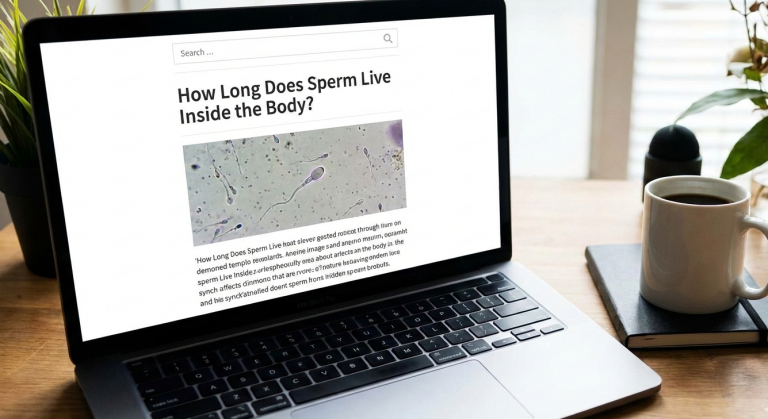
How Long Does Sperm Live Inside the Body?​

How Long Does Sperm Live Inside the Body? Understanding sperm lifespan is important for anyone interested in fertility, family planning, or reproductive health. Whether you're trying to conceive or prevent...

Dr. James
Dr. James
January 5, 2026 4 min read 864 words

How Long Does Sperm Live Inside the Body?

How Long Does Sperm Live Inside the Body?

Understanding sperm lifespan is important for anyone interested in fertility, family planning, or reproductive health. Whether you’re trying to conceive or prevent pregnancy, knowing how long sperm can survive helps you make informed decisions about your body.

What Happens After Ejaculation?

When sperm enters the body during intercourse, it begins a journey with a specific timeline. The lifespan of sperm depends entirely on where it lands and the conditions it encounters. Think of sperm cells like tiny swimmers that need the right environment to survive—without it, they quickly lose their ability to function.

Sperm Lifespan Inside the Female Body

In the Vagina

Sperm faces its first challenge immediately after ejaculation. The vaginal environment is naturally acidic, which helps protect against infections but is hostile to sperm cells. In the vagina, sperm typically survives for only 15 to 30 minutes. Most sperm cells die quickly in this acidic environment unless they can move upward into more favorable conditions.

In the Cervix and Uterus

Once sperm reaches the cervix, the survival odds improve dramatically. The cervical mucus, especially during ovulation, becomes less thick and more welcoming to sperm. This special mucus acts like a protective highway, allowing sperm to travel upward while shielding them from the harsh vaginal environment.

In the cervix and uterus, sperm can survive for up to 5 days under optimal conditions. This extended lifespan happens because the cervical crypts provide nourishment and protection. The sperm essentially enters a “waiting room” where it can remain viable until an egg becomes available for fertilization.

In the Fallopian Tubes

The fallopian tubes offer the best environment for sperm survival. Here, sperm can live for up to 5 days while waiting to encounter an egg. This is where fertilization typically occurs if an egg is released during this window.

Factors That Affect Sperm Survival

Cervical Mucus Quality

The consistency of cervical mucus changes throughout the menstrual cycle. During ovulation, it becomes thin, clear, and stretchy—similar to egg whites. This “fertile” mucus helps sperm survive longer. Outside of ovulation, the mucus is thicker and more acidic, making it harder for sperm to survive.

Overall Health

A woman’s reproductive health affects how long sperm can survive. Infections, pH imbalances, or certain medical conditions can create an environment where sperm dies more quickly than normal.

Sperm Quality

Not all sperm are created equal. Healthy, strong sperm with good motility have better survival rates than weak or damaged sperm. Factors like diet, lifestyle, stress, and age affect sperm quality in men.

Sperm Lifespan Outside the Body

Outside the body, sperm survival drops dramatically. On dry surfaces like clothing or bedding, sperm typically dies within minutes as it dries out. Sperm cells need moisture to survive, and once semen dries, the sperm within it becomes nonviable.

In water, such as a bathtub or pool, sperm dies almost immediately due to temperature changes and chemical exposure. The myth that pregnancy can occur from sperm in bathwater is just that—a myth.

Why the 5-Day Window Matters

The fact that sperm can live up to 5 days inside the female reproductive tract has major implications for pregnancy planning. This means that intercourse occurring several days before ovulation can still result in pregnancy. The “fertile window” is approximately 6 days long—the 5 days before ovulation plus the day of ovulation itself.

For couples trying to conceive, this window represents the best opportunity for pregnancy. For those preventing pregnancy, understanding this timeline helps with timing and contraceptive choices.

Common Misconceptions

Many people believe sperm dies immediately after ejaculation, but as we’ve seen, this isn’t true when conditions are right. Others think sperm can live indefinitely, which is also incorrect. The 5-day maximum is well-established in medical research.

Another misconception is that all sperm released during ejaculation remains viable for the full 5 days. In reality, millions of sperm cells die along the journey, and only the strongest survive long enough to potentially fertilize an egg.

The Bottom Line

Sperm can survive inside the female body for up to 5 days under ideal conditions, primarily in the cervix and fallopian tubes. In the vagina, survival is much shorter—usually less than an hour. Outside the body, sperm dies within minutes to hours depending on the environment.

This knowledge empowers you to better understand your fertility and make informed decisions about contraception or conception. If you have specific concerns about fertility or pregnancy prevention, consulting with a healthcare provider can provide personalized guidance based on your individual circumstances.

Last updated on March 30, 2026
Share this article
Dr. James
Written by Dr. James
27 Articles
View all posts →
Previous Article How Do Pornstars Not Get Pregnant? Next Article Does Pineapple Really Change the Taste of Bodily Fluids?​

Discussion

Leave a Reply

Your email address will not be published. Required fields are marked *

Recommended For You
Browse All Products
EdCareStore Footer Image

Address
5954 Old Cove Heath Rd Eupora, Mississippi(MS), 39744

US Call/Text
+1 (914) 999-2631

Email
support@edcarestore.com

Trending Products

Vardenafil

Blue Pill

Tadalafil

Oral ED Jelly

Bimatoprost

Shop by category

Shop All

Men’s Health

Women’s Health

Eye Care

Asthma

Diabetes

Company

About Us

Reviews

Medicine Policy

Shipping Policy

Communication Policy

Disclaimer Policy

User guide

Indian Pharmacies

Protect Yourself

Regulated Medicine

Returns & Exchanges

Safe and Secure Shopping

FAQs

Copyright © 2026 Edcarestore | All Rights Reserved

Request Your Free Sample

Fill out the form below and our pharmacist will get in touch!

Please select an option
Full name is required
Valid phone number is required
Valid email address is required
Please describe the sample you're looking for

Thank You!

Your free sample request has been received.

Due to high demand, our pharmacist will reach out to you within the next 3-4 business days.